
Do You Know What Pope Leo XIV is Reading?
I do. Maybe.

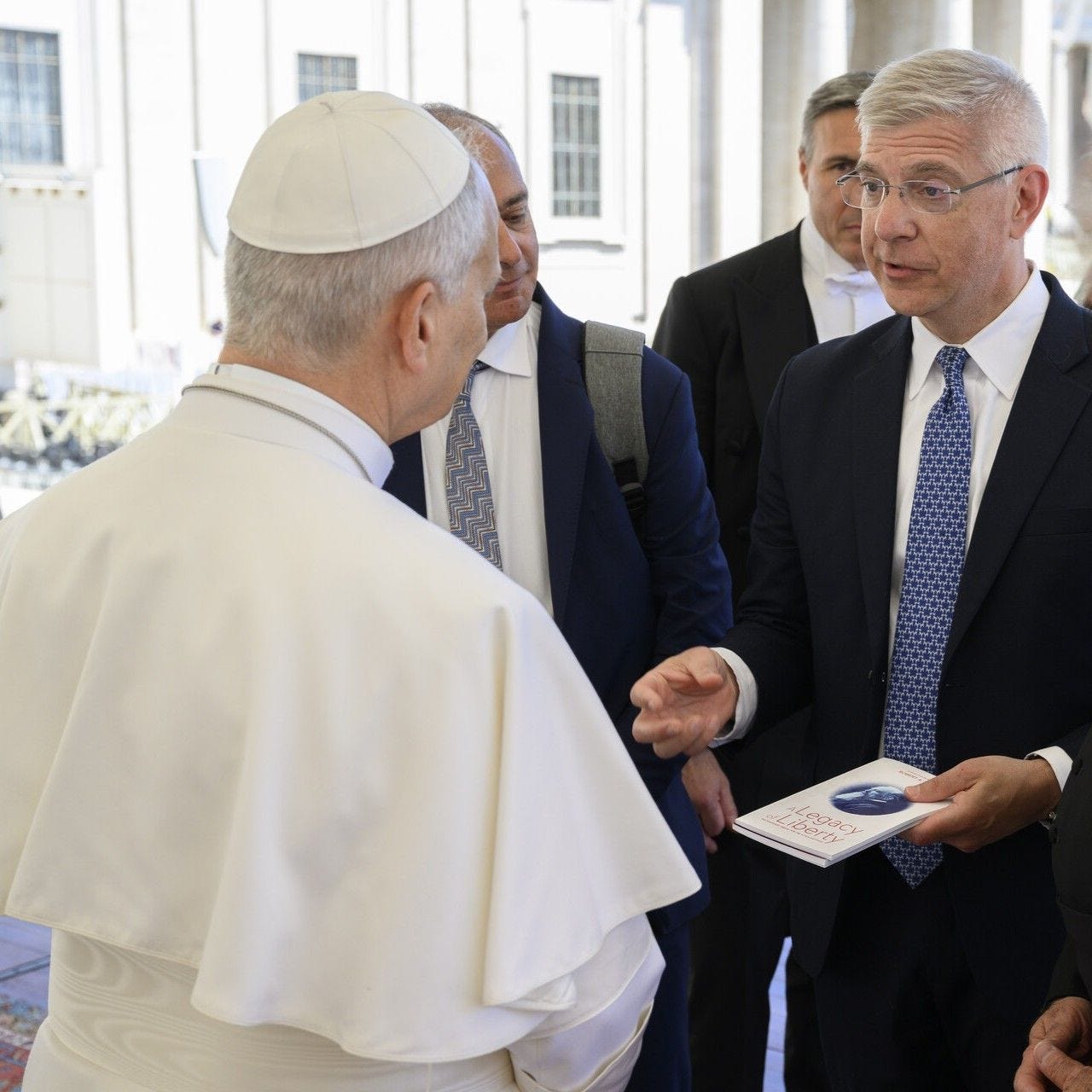
Many thanks to Acton Institute president, Kris Mauren, for giving Pope Leo XIV a copy of my book, The American Experiment in Ordered Liberty.
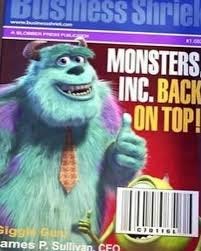
Yes, mine is underneath the top book, which reminds me of what happens to Mike Wazowski on this magazine cover from the Disney-Pixar film, Monsters, Inc.:
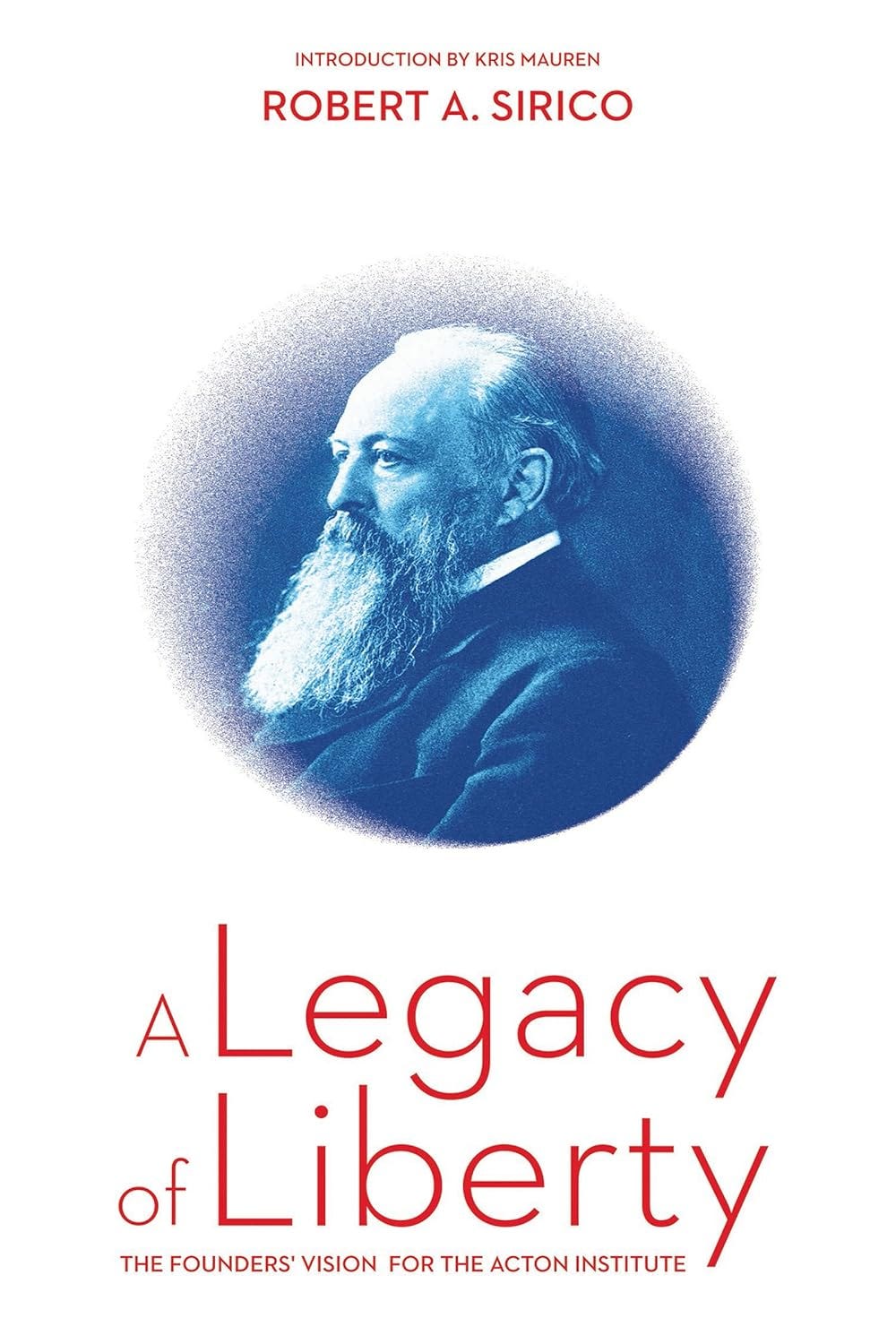
On the other hand, the top book you see is A Legacy of Liberty: The Founders Vision for the Acton Institute (Acton Institute, 2021), by Acton Institute’s co-founder and President Emeritus, Robert A. Sirico. It contains two of Fr. Sirico’s important early essays, “Toward a Free and Virtuous Society” and “The Entrepreneurial Vocation,” along with an introduction by co-founder and current president, Kris Mauren. I am so grateful to both of these gentlemen for their long, patient work for faith and freedom.
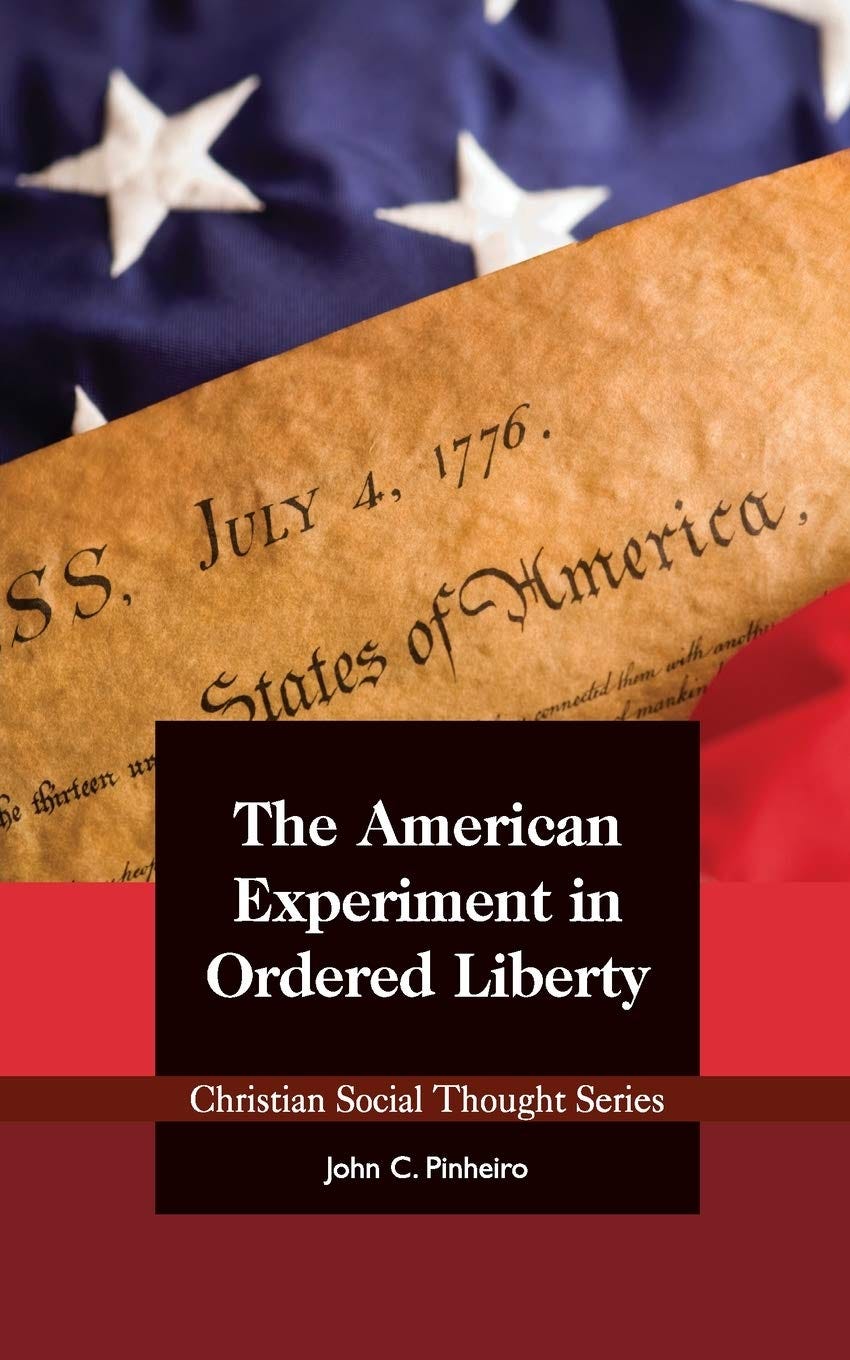
So, why also give Leo XIV my book, The American Experiment in Ordered Liberty (Acton Institute, 2019)?
Leo is, of course, the first pope from the United States of America. He even went to school near Grand Rapids, where the Acton Institute’s global headquarters is located.
But these alone are not sufficient to explain why out of the 180+ books Acton has published since its founding in 1990, mine was given to Pope Leo XIV along with Fr. Sirico’s A Legacy of Liberty.
The question of whether Catholicism is compatible with the American project in liberal democracy remains contentious. Many contemporary Catholic writers and intellectuals answer in the negative.
As the book’s description says:
In this volume, Professor John Pinheiro brings historical expertise to the topic, assessing the merits of the American project by focusing on the founding period. He examines the views of the founders and the realities of early American culture in light of the principles of Catholic social teaching and finds no simple answer to the question of Catholic and American compatibility. For the American experiment was not the realization of an ideological agenda; instead, it was the practical outworking of a commitment to protect traditional liberties. These liberties were largely consistent with Catholic doctrine. If the American project is not perfect, neither is it beyond redemption. Pinheiro points out that the task given to Catholics is not to raze the institutions of religious and political liberty but instead to "redeem the time" by embracing good and opposing evil in our own day.
Reflecting on the deep honor of meeting Pope Leo XIV, Mauren says “it is an exciting moment not only for the Church, but for those committed to the questions of human dignity, freedom, vocation, and human flourishing. After more than thirty-five years of Acton’s work, including over two decades by our Rome office, I find myself looking ahead with renewed optimism. There is a real opportunity to deepen leadership formation, engage new audiences, and continue bringing these ideas into the heart of conversations shaping the future. We were grateful to provide him with a copy of both “Legacy of Liberty” and “The American Experiment” as a small sample of Acton’s work, and look forward to what the future holds for the Church and for Acton.”
My next book, to be published by Post Hill Press in 2027, will explore tradition, place, and the American Founding. More on that some other day, though.
For now, I’m deeply honored to know my 2019 book on the American Founding, and the good work of Acton Institute, might be on the pope’s nightstand.